
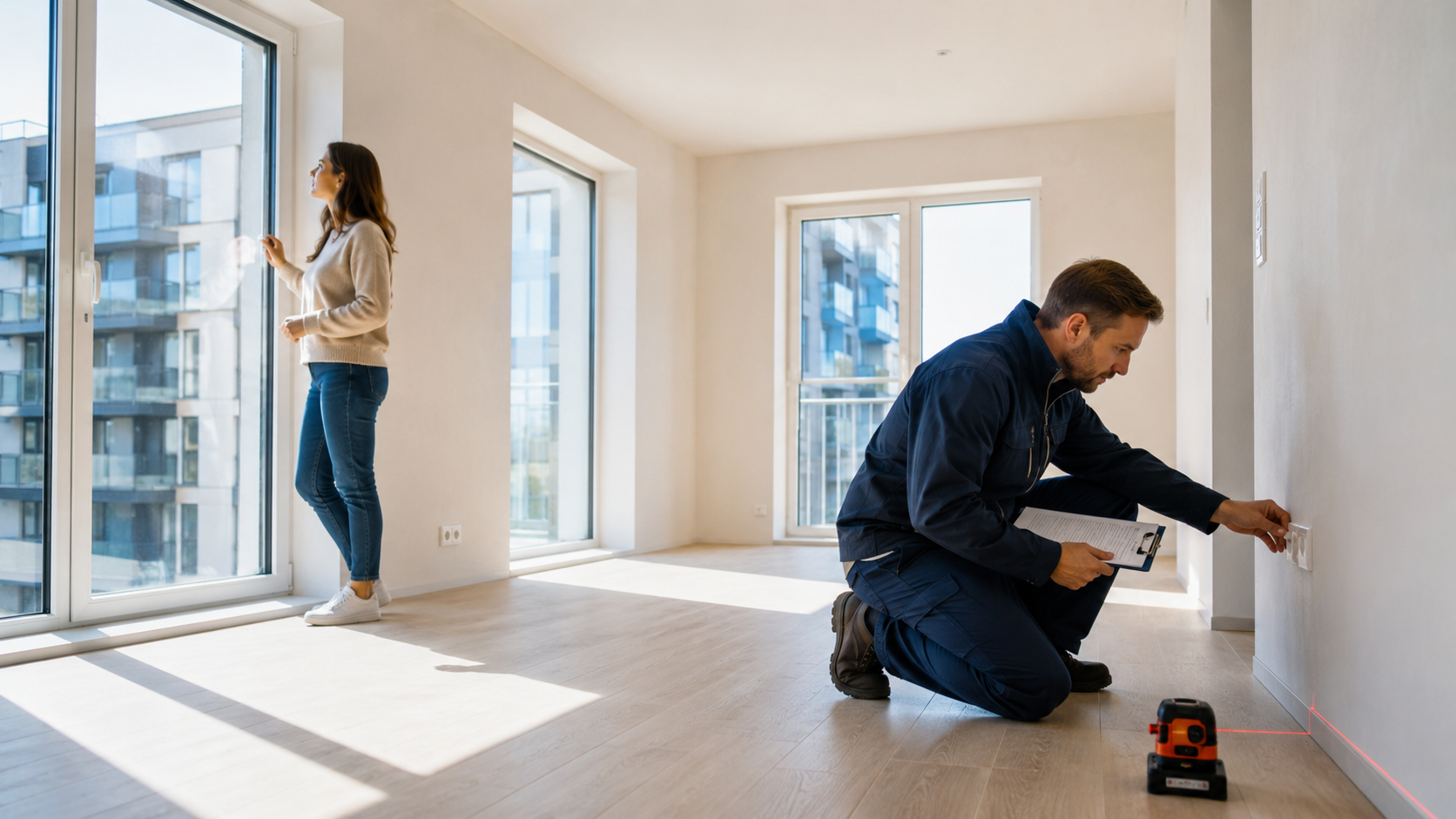
Apartment Handover Checklist: How to Inspect a New-Build Apartment
Apartment handover is the point at which the buyer compares the promised specification with the actual condition of the property. Even a well-built new apartment may have minor defects that are easier to correct before the handover act is signed, keys are transferred and renovation begins.
The purpose of the inspection is not to produce the longest possible defect list. It is to check the apartment systematically against the contract, floor plan, specification and technical documents. Clearly recorded defects reduce disputes and make it easier to agree on corrective work and deadlines.
What to prepare before the inspection
Review the contract and all appendices in advance: the apartment plan, stated area, finish specification, window and door types, radiators, electrical points, meters and included equipment. Where the contract defines a particular specification, that document becomes the baseline for the inspection.
Bring a phone with a camera, power bank, torch, tape measure or laser distance meter, small spirit level, charger or socket tester, a sheet of paper for checking ventilation and written notes. For a large apartment, complex engineering systems or limited construction experience, consider bringing an independent technical inspector.
Documents and starting information
Before the inspection begins, confirm the apartment number, floor, measured area, room schedule, meter readings, included equipment and the procedure for submitting comments. Make sure the unit being inspected is the same property identified in the contract.
For first-sale contracts involving future real estate, Ukrainian Law No. 2518-IX provides a procedure for signing the handover act without claims or submitting reasoned written comments regarding construction defects. The exact deadlines and process depend on the contract and purchase mechanism, so review them before the inspection.
Area, layout and geometry
Compare the actual layout with the plan: walls, door openings, risers, ventilation ducts, balcony or terrace. Check whether any elements reduce usable space or interfere with the planned furniture arrangement.
Control measurements can reveal material differences. The final area should be checked against the technical documentation and contract, which should explain how the price or other terms are adjusted if the measured area differs from the design area.
Walls, floor and ceiling
Inspect surfaces in natural and side light. Look for substantial unevenness, hollow or detached areas, moisture marks, leaks, mould, exposed reinforcement, through-cracks and damaged corners. Minor shrinkage cracks are not the same as structural defects; any doubtful area should be reviewed by a qualified specialist.
Where the apartment is delivered with screed or plaster, check its integrity and whether it matches the agreed finish level. A shell-and-core surface should not be judged as finished decoration, but defects that obstruct later works or indicate poor workmanship should be recorded.
Windows, balcony and entrance door
Open and close every window sash. Check ventilation modes, handle operation, frame alignment and sealing. Glazing units should not have cracks, major scratches or moisture trapped between panes. Inspect installation joints, sills, external flashings and connection points.
The entrance door should open freely, clear the floor, lock correctly and close tightly. On a balcony or terrace, check guardrails, drainage, waterproof junctions and the condition of external elements.
Electrical system and meters
Compare the number of sockets, switches and cable outlets with the specification. Where power is available, test sockets with a safe tester or charger, check lighting points and operate the circuit breakers. Circuits should be clearly labelled or documented.
Record meter serial numbers and readings. Do not dismantle the distribution board or perform hazardous tests yourself. Earthing, insulation resistance and other electrical parameters should be tested by a qualified electrician.
Water, drainage and heating
Inspect risers, shut-off valves, joints, radiators, manifolds and plumbing connection points. There should be no drops, leak marks, corrosion or mechanical damage. Where water is available, check supply, drainage and the visible joints for leaks.
Radiators should be firmly mounted and free of dents or leakage. Ask how heating is commissioned and where thermostats and meters are located. It is also useful to confirm which systems are supported by backup power during outages.
Ventilation
Hold a sheet of paper near the ventilation grille. Where there is adequate extract airflow, the paper should be drawn toward the opening. Test with a window open, because an airtight apartment without incoming air can distort the result.
Weak or reverse airflow should be recorded and assessed professionally. Do not block ventilation ducts during renovation or alter them without an approved technical solution.
Common areas
Handover is also a useful opportunity to assess the route from the entrance to the apartment: section doors, intercom, corridors, stairs, lifts, lighting, signage, parking access and the surrounding territory. These elements may not all be included in the individual handover act, but they directly affect everyday comfort.
When comparing Perfect Group projects, assess not only the apartment but also the readiness of building systems, landscaping, access, safety and whether the delivered environment matches the stated concept.
How to record defects correctly
Describe each defect precisely: the room, exact location, nature of the issue, approximate size and a photograph. A phrase such as “poor workmanship” is difficult to correct or verify. A better note is “approximately 40 cm crack beside the bedroom window” or “left window sash does not remain in ventilation mode”.
Defects should be entered into a defect schedule, an appendix to the handover act or another written document specified by the contract. Record the correction deadline, responsible party and reinspection procedure. Keep copies of documents, photographs, video and correspondence.
Should the handover act be signed with defects?
Do not sign a statement confirming that there are no claims if material defects or agreed corrective items have not been recorded in writing. At the same time, minor defects do not always require refusal of handover; the decision depends on the contract, the severity of the issues and the proposed correction process.
Where there is a dispute about area, specification, serious cracking, engineering systems or wording in the act, obtain advice from a property lawyer or technical expert before signing.
Reinspection and key transfer
After corrective work, reinspect the exact locations listed in the defect schedule. New finishing work should not merely conceal the issue without resolving its cause.
At final transfer, count all keys, access cards and remote controls, and collect technical passports, instructions and warranty documents. Record meter readings and the handover date. Renovation and utility setup can then proceed on a documented basis.
Conclusion
A proper apartment handover is a structured review of documents, area, surfaces, windows, doors, electrics, water, heating, ventilation and included equipment. The most important rule is not to rely on memory or verbal promises: every material comment should be recorded in writing.
A buyer who prepares a checklist, brings a specialist where necessary and agrees correction deadlines reduces the risk of additional cost after renovation begins.
FAQ
Can I inspect the apartment without a specialist?
Yes, provided you use the contract and a detailed checklist. For a large apartment, complex systems or limited construction experience, a technical inspector can identify issues that are easy to miss.
What should I bring to apartment handover?
A phone with a camera, torch, tape measure or laser meter, small level, charger or socket tester, paper for checking ventilation, and copies of the contract, floor plan and specification.
Can I sign the handover act if there are defects?
This depends on the contract and severity of the issues. Defects should be recorded in writing with correction deadlines, and the buyer should not confirm that there are no claims when claims remain.
What if the measured apartment area is different?
Compare the measurement with the technical documentation and contract. The contract should define the price adjustment or another method for resolving the difference.
When should the keys be transferred?
After the contractual handover procedure, documentation, recording or correction of defects, and completion of the parties’ financial obligations.




 Want to calculate the cost of an apartment?